
ADAS and Wheel Alignment Checks After a Fender Bender in Fairless Hills, PA
Peruzzi Collision Center - ADAS and Wheel Alignment Checks After a Fender Bender in Fairless Hills, PA
Even a low-speed bump in a grocery lot can nudge cameras, radar modules, or suspension angles just enough to change how your driver-assistance systems behave. In Fairless Hills, where Lincoln Highway, Route 13, and neighborhood streets intersect with frequent stops and quick merges, small errors can lead to distracting alerts or longer stopping distances. Our certified team helps local drivers understand when a post-accident check is smart, how calibration and alignment interact, and what to expect from a professional, factory-referenced process.
Why ADAS and alignment matter after minor damage
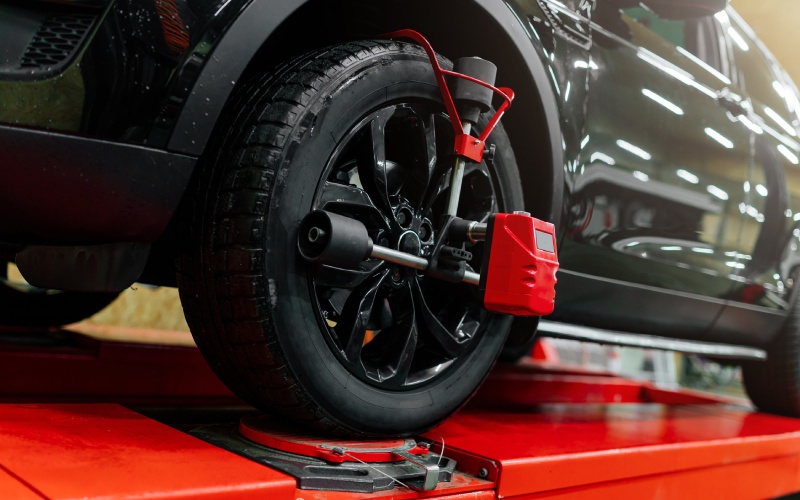
Driver-assistance features rely on precise geometry. A camera one degree off may misread lane lines, and a slightly skewed radar bracket can shorten detection range. If a curb strike or bumper tap followed your fender bender, suspension angles might drift, pushing lane-keep and forward-collision systems outside their designed targets. We verify structure with computerized measuring, correct wheel alignment, and then calibrate sensors on a level surface with model-specific targets. The goal is simple: restore accurate inputs so safety systems react consistently in real traffic, not just on paper.
- Strange alerts: Lane or forward-collision warnings trigger too early or too late.
- Assist dropouts: Adaptive cruise or lane centering disengages without reason.
- Steering feel: Subtle pull, off-center wheel, or extra nudging during lane keep.
- Glass changes: A new windshield near the camera mount almost always needs calibration.
- Bumper work: Repaired or replaced fascias can shift radar angle or block signals.
If any of these sound familiar on your runs past Oxford Valley or during school pickups, a professional evaluation can save time and reduce guesswork. We document pre-scan codes, structural measurements, alignment corrections, and calibration results—giving you and your insurer a clear record of what was fixed and why.
What a certified workflow looks like
We start with a pre-scan and visual inspection, then measure key body points against factory data. If the structure checks out, we verify and correct camber, caster, and toe. Next comes static calibration: positioning OEM-referenced targets at exact distances and heights on a level, controlled floor. Many models also require a dynamic calibration—an on-road drive meeting speed and lane-mark conditions so the system can learn. We finish with a post-scan, a road test, and a quality check for fit-and-finish to be sure nothing interferes with sensors, from bumper brackets to freshly refinished panels.
Glass, paint, and parts—details that affect sensors
Not all glass is the same. Camera-equipped windshields have specified thickness and optical clarity; off-spec glass can distort images. Likewise, heavy filler in front of a radar or metallic paint with incorrect thickness may degrade signal return. Our refinishing process controls film build and employs clean masking to prevent overspray on lenses or proximity sensors. When parts are replaced, we follow manufacturer repair procedures, torque specs, and bracket checks—because a correct mount is the foundation of a correct calibration.
Insurance questions often follow a minor accident. As a direct repair facility, we coordinate with carriers, submit scan reports, photos, and calibration documentation, and explain any OEM-required steps. That transparency helps approvals move faster and reduces back-and-forth for you. We also keep you updated as parts arrive or as calibration windows depend on weather and traffic conditions necessary for dynamic routines along US-1 or I-295.
Frequently Asked Questions:
Do I need calibration if no warning lights are on?
Yes, when OEM procedures call for it after glass, bumper, or alignment work. Not every misalignment turns on a light, so we verify with targets and scans.
How long should I plan to be without my vehicle?
Many checks complete the same day. If alignment, parts, or dynamic calibration are required, timing can extend based on road and traffic conditions.
Will an alignment alone fix ADAS issues?
Alignment supports accuracy but is not a substitute for calibration. We do both when procedures require, then document results in a post-scan.
What if I replaced the windshield recently?
Most camera-mounted windshields require calibration afterward. We verify correct glass specifications and camera bracket integrity before aiming.
Can I drive while waiting for calibration?
If systems are not performing correctly, we recommend minimizing driving until diagnostics are complete. Safety features may not respond as intended.
For Fairless Hills drivers balancing errands between local shops and Oxford Valley, a quick post-accident evaluation can restore confidence. Our I-CAR-trained team checks structure, alignment, and sensors together so your lane keeping, blind-spot alerts, and forward-collision warning work in harmony. Whether it was a cart scrape that turned into a bumper repair or a windshield chip that became a replacement, we follow the repair information for your exact vehicle, calibrate in-house, and road test on familiar Bucks County routes. Schedule an estimate online and let us handle the details—including insurer communication and documentation—so you can get back to smooth, predictable drives.